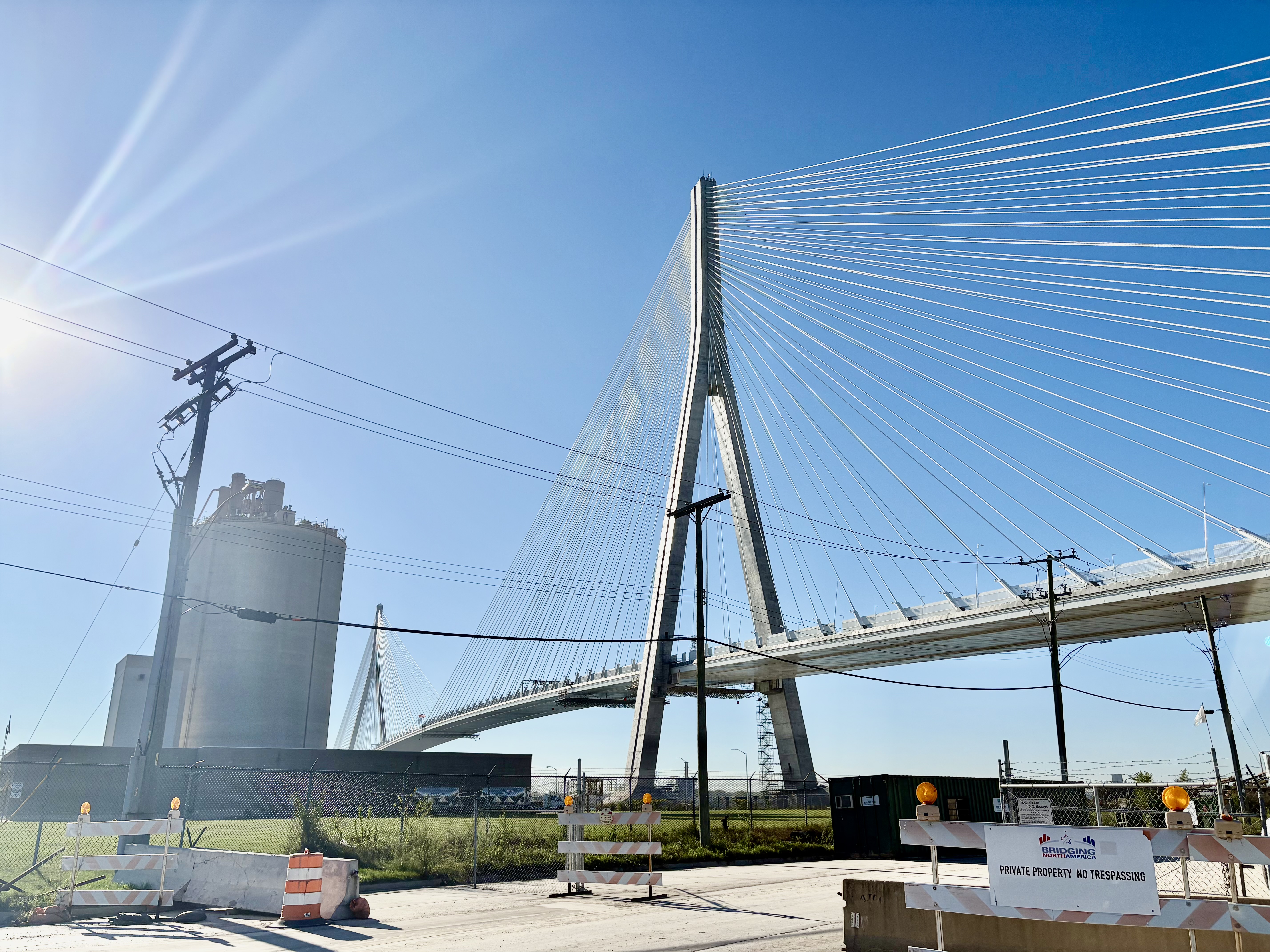
A 50% tariff on most Canadian imports announced Monday, July 20, could squeeze Oakland County manufacturers and their cross-border supply chains just as the long-delayed Gordie Howe International Bridge prepares to open six days later.
The levy covers dairy products, alcohol, food and construction materials, according to WXYZ. It is set to take effect within 30 days. Products already taxed under earlier tariffs on steel, aluminum and auto parts are exempt.
Michigan exported $24 billion in goods to Canada in 2024, roughly 39% of all the state's exports, according to the Detroit Regional Chamber. Vehicles and vehicle parts alone accounted for $25 billion in exports that year, with 55% headed to Canada. Automotive OEMs and suppliers operate on both sides of the border, with components crossing multiple times during assembly.
Gov. Gretchen Whitmer, speaking in Southfield on Tuesday, July 21, said the tariff "hurts Michigan more than any other state because we are so heavily into manufacturing."
Trade attorney Jennifer Smith-Veluz told WXYZ the tariff invokes Section 338 of the Tariff Act of 1930, marking the provision's first modern use. She called it a powerful new presidential tool and said companies should prepare for the levy while expecting court challenges.
Semi-truck driver and business owner Austin Floyd told WXYZ the trade tensions are affecting his work hauling materials across the border. "Definitely hurts small businesses," Floyd said. "I've seen warehouses I know of that used to take in stuff."
Bridge opening set for July 27 despite tensions
The Gordie Howe International Bridge, a 1.5-mile span connecting Detroit and Windsor that has been under construction since 2018, is set to open to traffic Monday, July 27. Two U.S. officials told the Associated Press they expect the opening to proceed, though the tariff dispute has introduced uncertainty.
Michael Greiner, associate professor of management, legal and ethical studies at Oakland University's School of Business Administration in Rochester Hills, expressed skepticism about the timeline in a WXYZ interview published Tuesday, July 21.
"I'll believe the bridge is opening when it actually is open," Greiner said. "Because unfortunately we've been to this movie before. We've seen where things have been delayed because of the ongoing disputes with Canada."
Greiner, a former deputy mayor of Warren and bankruptcy attorney who has published research in the Harvard Business Review, noted the bridge's opening was originally scheduled for Thursday, June 12, before being postponed over disagreements about toll revenue.
Canada canceled the planned joint ribbon-cutting ceremony with the United States. A spokesperson for Canadian Infrastructure Minister Gregor Robertson said it would be inappropriate to hold a celebratory event given the trade tensions. Canada plans its own ceremony Friday, July 24.
The bridge cost approximately $4.4 billion to $4.7 billion, with AP and Reuters reporting different figures. Canada financed construction under a deal allowing it to recover costs through tolls before sharing revenue with the United States. The Detroit-Windsor corridor is the busiest land border crossing in North America, according to the Detroit Free Press, and the new bridge will join the Ambassador Bridge and the Detroit-Windsor Tunnel.